

How To Reduce Tearing During Birth
What no one explained to me the first time, and what changed everything the second time.
Copy the exact preparation that helped me go from
3 tears + 2nd-degree perineal tear
to zero perineal tearing with my second birth.
My first birth went well on paper…
HI THERE! I’m Cassie.
When I was pregnant with my first baby, I genuinely believed I was doing everything right.
I was prepared.
Organized.
Responsible.
The kind of mom who does her research.
I took:
Four hospital-provided birth classes
Two breastfeeding classes
Notes on everything
My hospital bag was packed early.
The nursery was finished.
Appointments were easy.
No red flags.
From the outside, everything looked perfect.
However, there was one nagging fear that kept popping up — quietly, persistently — even early in pregnancy.
Perineal tearing.
The fear I didn’t talk about out loud
I didn’t say it much, because it felt shallow.
I told myself:
“All that matters is a healthy baby.”
And of course that was true.
But deep down, I was scared of:
- tearing badly
- painful stitches
- a long recovery
- struggling with intimacy
- not feeling like myself again
And it felt like everyone I talked to had a horror story.
Once you hear one tearing story, you hear a hundred.
So I did what most pregnant women do…
The 1 a.m. Google spiral
Late at night, when sleep wouldn’t come and my brain wouldn’t shut off, I searched.
“How to avoid tearing during birth.”
“How to do Kegels to prevent tearing”
“How to do perineal massage”
I felt like I read or listened everything 12 times over.
- blogs
- forums
- Reddit threads
- Instagram posts
- Pinterest
- Youtube videos
I saved posts.
I screenshotted tips.
I had opened tabs I never closed.
But still, nothing felt clear enough to follow confidently. And it still felt like I wasn’t doing enough, or I wasn’t doing it right.
Everything contradicted something else.
Everyone had an opinion.
No one explained how it all fit together.
Here’s what I was doing wrong.
The advice overload problem
I was being told to:
- strengthen my pelvic floor
- relax my pelvic floor
- do Kegels
- avoid Kegels
- do perineal massage
- practice deep breathing
- “trust my body” or “listen to my body”
- push harder
- push less
It all left me thinking: “Okay… but WHAT do I actually do?”
I had so much information I felt kind of frozen. I wasn’t really sure where to start and already felt like I was behind.
There was no roadmap.
I felt aimless, and like I had all this information but no structure to carry out a plan.
I couldn’t make sense of what points were most important.
There was just so much noise, and instead of feeling more confident and calm, my anxiety was only worsening.
Trying perineal massage… and quietly quitting
As I was getting closer to due date, I asked my doctor more about what I could do to prevent tearing.
She talked to me about perineal massage as an evidence-based option to reduce risk of severe-tearing.
I had read about it and heard about it several times in my own research, but hadn’t given it a shot.
So I tried it out.
Honestly— it sucked.
It was uncomfortable.
It was awkward.
I felt like I had to do it in secret because it felt almost taboo.
It was hard to reach.
It felt painful at times.
I didn’t want to ask my husband to help.
I wasn’t sure if I was doing it correctly.
Because of the mental and physical discomfort, I definitely wasn’t consistent.
After a few attempts, I stopped.
And I felt like a failure about it because it seemed like the most sure-fire way to reduce my chance of tearing.
What I thought Kegels were doing…
At the same time, I was doing a lot of Kegels.
Because that’s what everyone tells you to do… right?
I remember one of my coworkers telling me, “Do your Kegels now so you won’t pee your pants after birth.”
She also told me they’d make pushing easier; that a stronger pelvic floor would help me get the baby out in fewer pushes.
And when you hear advice like that from someone who’s already been through it? Of course you take it seriously!
So I did.
I assumed:
stronger pelvic floor = less tearing
stronger pelvic floor = more efficient pushing
stronger pelvic floor = fewer postpartum symptoms
It felt logical. Responsible. Smart.
What no one explained to me was this:
A pelvic floor that only knows how to tighten may struggle to stretch.
I was training pelvic floor and core strength — a lot of it — but I wasn’t training release.
I was building tension without learning how to let it go.
And birth doesn’t just require strength.
It requires BOTH.
And I didn’t really understand what that meant yet — not until labor.
My water broke around 4 a.m.
I remember waking up suddenly and realizing what was happening — that mix of adrenaline and disbelief where you think, okay… this is really happening.
Things progressed smoothly from there.
No complications.
No red flags.
Baby was doing great.
I was doing great.
I eventually got an amazing epidural, which gave me a chance to reset for a bit. That part felt like such a relief — physically and mentally. I could breathe. I could relax. I could gather myself for what was coming next.
By noon, I was fully dilated and it was time to push.
This was completely unknown territory for me, so I followed instructions from my doctor and nurses exactly.
I’m a type-A, rule-following, people-pleasing pharmacist — I wanted to be a good patient.
I wanted to be efficient.
I wanted to get the baby out quickly.
I had heard other women talk about how long they pushed — or how short their pushing stage was — and somewhere in my mind, that had quietly become the goal.
Twenty minutes.
Fifteen minutes.
A few pushes.
I wanted that story too.
So when the contractions came and it was time to push, I did exactly what I was coached to do — over and over again.
I held my breath.
I bore down hard.
I pushed as forcefully as I could for a full 10-count.
At the time, I didn’t realize that pushing this way — holding your breath and bearing down with maximum force — puts a huge amount of pressure directly onto the perineum.
But that’s exactly what I was doing.
And my body responded the only way it knew how.
I tightened.
I braced.
I pushed harder.
Instead of softening and stretching with each contraction, my pelvic floor resisted — because I had never learned how to release it. All of the tension I had built up during pregnancy was working against me in that moment.
I didn’t know there was another option.
I didn’t know there was another way to push.
I didn’t know I could work with my body instead of forcing it.
I just did what I was told — because I wanted to be the easy patient who did everything right.
And on the surface, it worked.
After about 25 minutes of pushing, my son was born.
I remember feeling proud of myself. One of my nurses even asked me to double-check that this was really my first baby because of how quickly I pushed. It felt like I had earned some kind of gold star.
What I didn’t understand yet was that I had paid for that efficiency.
When birth meets reality
I’m forever grateful my son was born healthy.
Having him handed to me right after birth is still one of the best moments of my life, and I’ll remember it forever.
On the other hand, I was not prepared for the swelling and pain with my recovery over the coming weeks.
I had:
A 2nd-degree perineal tear
A urethral tear
A labial tear
All required stitches.
Reality hit once the epidural wore off.
The recovery no one explains
Even with just a 2nd degree tear, recovery was painful and unfortunately seemed to move at a snail’s pace. It was physically and mentally draining.
Sitting hurt
Walking hurt
Sneezing felt terrifying
It burned every time I had to pee. (I actually went back to the doctor thinking I had a UTI because of the pain)
I lived on padsicles and took ibuprofen and Tylenol on a schedule around the clock.
Swelling went down slowly
Sex was painful for months.
Returning to exercise felt scary.
I remember thinking: “Is this just how it is?”
No one talked about this part.
So I assumed it was normal.
I stayed quiet.
The moment everything changed
Lying in bed during recovery, I knew one thing for sure. I could not do this again.
Not the tearing.
Not the pain.
Not the weeks of swelling, burning, and rotating Tylenol and ibuprofen just to get through the day.
I already knew we wanted to have another baby at some point. And if I had the chance to do it again, something would have to change.
And it wasn’t because I hadn’t tried the first time.
I had done what smart, educated, proactive women do:
I researched.
I asked all the questions.
I gathered everything… but put it into one big pile in my brain that I couldn’t sort out.
What I really needed was a clear path, not more information.
I wanted:
a plan I could actually follow independently, without an advanced degree in physical therapy
steps that seamlessly fit into real life
something evidence-informed, not fear-based
a way to prepare that didn’t require endless appointments or thousands of dollars spent on private courses
Because pregnancy, birth, and babies already cost enough.
Most of all, I wanted to know that I had done everything reasonably possible to prevent the same tearing and recovery — not by searching and stringing together YouTube videos, saved Instagram posts, and advice from well-meaning friends, but by preparing intentionally.
I wanted a different fourth trimester.
One where I could truly soak up newborn snuggles.
Feel present instead of foggy.
Recover without dreading every trip to the bathroom.
That decision — to stop collecting advice and start following a plan— is what changed everything for me.
And that plan is exactly what I teach now.
The mistake I didn’t even know I was making
Here’s the part that really changed everything:
It’s not like I wasn’t doing anything to prepare.
I was just preparing the wrong way.
I trained my pelvic floor to:
tighten
brace
grip
hold on to tension
But birth doesn’t require gripping.
Birth requires controlled release.
Your pelvic floor has to:
lengthen
relax
coordinate with your breath
move with your baby instead of resisting
No one ever explained that to me the first time.
And if no one has explained it to you yet, it’s not your fault.
Strength without release is not protection
This is the nuance most women (myself included) never hear:
A strong pelvic floor that can’t relax may actually increase tearing risk.
Because when pushing starts:
tension increases pressure
pressure concentrates at the perineum
tissue stretches faster than it can adapt
That’s when tearing is more likely to happen.
Here’s the part that surprised me most:
You do need pelvic floor and core strength.
But strength alone isn’t enough.
Your pelvic floor needs to be able to move through its full range of motion —
to contract and fully release, at the right moments.
That’s why mind–muscle connection matters so much.
Learning how your pelvic floor, core, and diaphragm work together —and how to control that relationship — is what allows you to release, lengthen, and create space when it matters.
When you train that balance ahead of time, your body doesn’t panic during labor.
It already knows what to do.
(And yes — this is exactly what the guide teaches you.
Keep reading.)
What I did differently the second time
When my second pregnancy came around, I still trained pelvic floor and core strength consistently, but I trained with intentional balance. I trained smarter.
I focused on:
• learning multiple cues that released my pelvic floor
• strategic mobility that created space in all 3 levels of the pelvis
• breathing that worked with contractions instead of against them
• pushing mechanics that would reduce strain instead of increasing it
Most days, I only spent about 10–15 minutes.
That’s it.
And here’s what happened:
Same hospital.
Same OB.
An epidural that was just as good.
But a completely different experience.
ZERO perineal tearing
One tiny urethral stitch
Significantly less swelling and pain
Faster recovery
Seamless reconnection and return to exercise and sex postpartum
That’s when I knew:
This information shouldn’t be this hard to find.
That’s why I created Pregnancy Pelvic Floor Connection
I knew I didn’t want to provide another:
❌ generic birth class
❌ overwhelming course
❌ expensive subscription
❌ impossible checklist
I wanted to share something clear.
Something realistic.
Something women could actually work through independently, at their own speed, without panic.
So I built the guide I wish I had the first time.
Now, I help hundreds of moms minimize or prevent tearing effortlessly with steps that take less than 20 minutes a day.
Learn how to prep your pelvic floor the easy way →
Please note: Results may vary and are not guaranteed. Due to the digital nature of this product , we do not offer refunds. All sales are final. View terms and conditions
Here’s what Paola had to say:

“I love your guide, Cassie! Followed it since late second trimester. Just had my second baby last Wednesday. No joke I had your early labor routine pulled up on my phone. I had a very fast delivery—baby was out in 1 push! She was born unassisted in triage, no epidural. I focused on my breathing, breathing down and relaxing my pelvic floor with each contraction and helping my body push, instead of tensing up. It was an amazing experience! I’ve recommended your guide to my fellow pregnant mama friends.”
Does this sound like you?
You’ve done the 1 AM can’t-sleep Google searches on how to prevent tearing, diving deep into pregnancy forums, only to leave feeling behind.
You tried perineal massage a couple times, but it was painful and uncomfortable and you couldn’t tell if you were even doing it right. So you stopped.
You’ve been overthinking tearing and recovery so much that the thought of a scheduled C-section sounds almost like a relief.
Imagine what it would be like to have NO tearing during delivery. Or even just a small first degree tear?
Significantly less pain in the first few weeks. (That means less pain with sitting, getting in and out of bed, going to the bathroom, etc.)
You can taper off the Tylenol and Ibuprofen earlier.
Feel like yourself again earlier.
Able to feel present with baby and your family. You can actually enjoy the newborn stage.
Over 200 moms (first time and moms of multiple) have turned their birth goals into reality with my Pregnancy Pelvic Floor Connection guide.
by turning off the advice coming from all directions —your well-meaning friend from work, your cousin, your local Facebook group for moms, your late night scrolling . . .
and giving clear direction for how to release pelvic floor tension and minimize tearing with easy-to-implement steps you can start immediately.
(And no, it isn’t some super expensive course or subscription that’s going to break the bank )

HERE’S THE RUN-DOWN
What Pregnancy Pelvic Floor Connection will walk you through
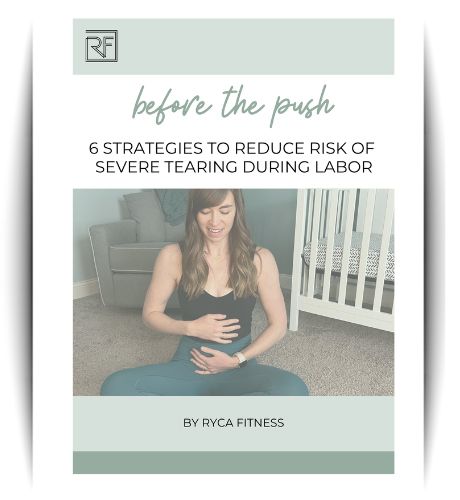
Start prepping for birth with 6 simple strategies to lower your risk of tearing, even as a first-time-mom with no experience.
Section 1: Perineal Tearing Explained
No, you don’t need to be an OB-GYN or have an advanced degree in physical therapy to understand your pelvic floor and perineum. I’ll break down the anatomy in simple terms, explain why tearing happens, and what factors affect risk and severity. This section gives you the facts without the overwhelm—just enough to feel informed and confident before we step into what you can actually do about it.

Section 2: Pelvic Floor Relaxation
In this section, you’ll learn how to train your pelvic floor to relax on command. This is something that’s essential for pushing but rarely taught in this amount of detail. With simple cues and a step-by-step video tutorial, I’ll show you how to build mind-muscle control so your pelvic floor works with you, not against you, during labor. Even if this is your first time doing any pelvic floor work, you’ll walk away feeling confident in how to release tension and lengthen these muscles effortlessly.
***This module alone is worth 10x the cost of this guide***

Section 3: Perineal Massage Protocol—without the stress.
After going through this section, you don’t have to dread perineal massage anymore, or guess if you’re doing it right. It gets to be easy. You’ll understand how to do it effectively with simplified steps, what it should actually feel like, when to start, and how often to do it for real benefit. I also share pro tips to make it way more doable and way less miserable and awkward.
And let me just tell you… if you try it and decide it’s not for you, that’s more than OK. Take a deep breath—you can skip perineal massage completely and still minimize tearing using all the other strategies.

Section 4: Hydration for Labor and Postpartum
Hydrated tissue is happier tissue, especially when it comes to stretching during birth and healing afterward. In this section, I explain how staying on top of your hydration can support more resilient, elastic tissue to minimize tearing, but also to fast-track postpartum recovery. You’ll also learn when and how much to drink for the biggest impact (it’s probably not what you’ve heard before).

Section 5: Finding the Ideal Birth Position (Epidural Friendly)
Not all birth positions are equal when it comes to reducing tearing. In this section, I walk you through the most recommended positions that reduce perineal pressure and tearing risk, whether or not you have an epidural. You’ll also get tips for modifying less-than-ideal positions to relieve stress at the perineum, and what to avoid when possible.
You don’t need a list of 50 different crazy birth positions you’ll never actually use or remember. I break it down to the top positions that are easiest to achieve.

Section 6: Perineal Compression
Warm compresses are one of the simplest, most effective tools for protecting your perineum, but yet almost no one tells you about them. In this section, I introduce how to apply counterpressure for the most benefit. One of the best parts is, this is something you don’t even have to work on. You get to ask someone else to do it for you!

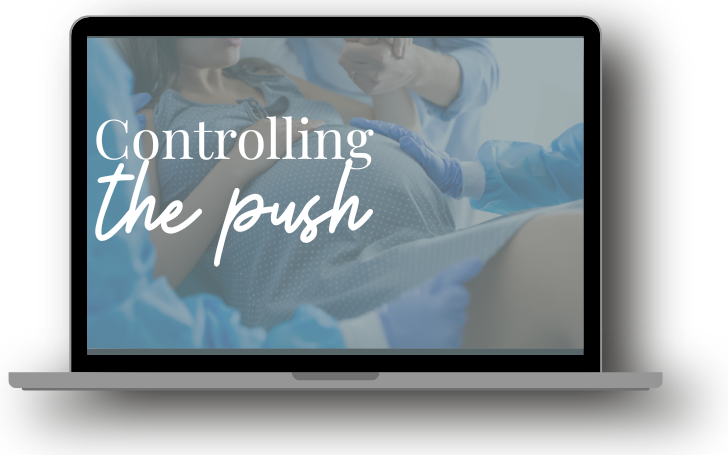
Section 7: Controlling the Push
Here is where you finally learn how to actually control your pushing to reduce the chance of tearing, without fighting your body’s instincts. Despite popular belief, it’s NOT a rule that you HAVE to hold your breath and push for a full 10-count. There is a calmer, more effective way to push that helps make the stretch intensity on the perineum more gradual rather than full throttle. In this section, I’ll show you exactly how to use down breathing so you’re pushing using your breath rather than straining.
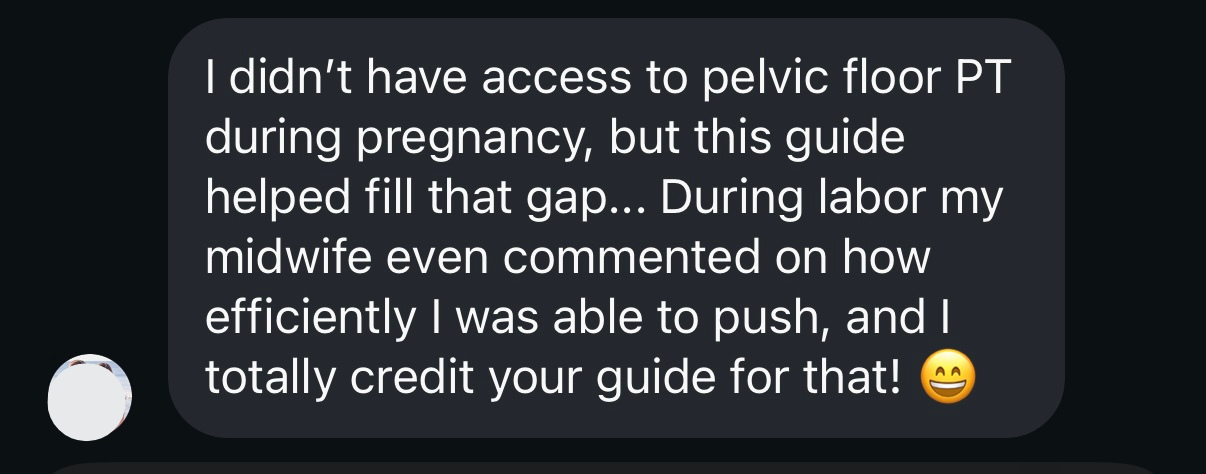
Here’s what Morgan had to say:
The part no one tells you about recovery
Here’s something most women only learn after birth:
The way your pelvic floor functions during pregnancy and labor directly affects how recovery feels.
Women who learn:
release
awareness
coordination
…often find it easier to RECONNECT postpartum.
And that’s whether this is your first baby or your third.
Here’s the Curriculum:
01: Perineal Tearing Explained
Pelvic floor anatomy
Protecting your perineum and the pelvic floor
Why does tearing happen?
Tearing degrees of severity
Incidence of tearing across degrees of severity
Tearing prevention plan outline
02: Pelvic Floor Relaxation
Pelvic floor relaxation video tutorial
Compass method
Four points method
Breathing cues - written and visual
Blossom method
How to practice pelvic floor release
Pelvic floor mobility training schedule

03: Perineal Massage Protocol
When to start perineal massage for most benefit
Length of sessions
How often to practice perineal massage
Step-by-step tutorial
Pro tips for success
04: Hydration for Labor and Postpartum
Why hydration matters for reducing tearing risk
Water intake recommendations for pregnancy
How to stay hydrated during labor
Hydration to support postpartum healing and breastfeeding
05: Finding the Ideal Birth Position
Epidural-friendly positions to reduce perineal pressure and minimize tearing risk
Birth positions to avoid
How to modify less ideal birth positions to reduce perineal pressure
06: Perineal Compression
How warm compresses support the perineum to reduce tearing
Who applies a perineal compress and when?
07: Controlling the Push
What is “purple pushing”
How to breathe with your contractions to keep the pelvic floor relaxed
Down-breathing method explained
Here’s what Darby had to say:
GET STARTED NOW WITH
Pregnancy Pelvic Floor Connection
WHO IS THIS FOR:
PREGNANT WOMEN WHO WANT TO MINIMIZE TEARING DURING BIRTH
If you’re pregnant and want to do something proactive to prepare your body for birth rather than just hoping all goes well, this guide walks you through the six strategies that made my second birth experience infinitely better than my first. These strategies can be applied whether it’s your first birth or your 6th! You’ll learn what impacts tearing risk, what to do now and during labor to prepare and protect your perineum, and how to feel confident going into labor knowing you’ve done what you can.
MOMS WHO WANT A SMOOTHER, EASIER RECOVERY
Even if you’re not a first-time mom, this guide will help you approach your next birth differently. If you had a hard recovery the first time or experienced tearing, this time can look different. The education, tutorials, and strategies inside Before You Push are exactly what helped me go from multiple tears with my first to zero tearing with my second.
WHO IS THIS not FOR:
WOMEN WHO WANT A QUICK FIX OR A GUARANTEE
Birth is unpredictable, and no one can promise a delivery with no tearing. What you can do is reduce your risk of severe tearing, and minimize tearing by preparing your body in the right ways. This guide gives you the strategies to do that, but it’s still up to you to apply them.
WOMEN WANTING 1:1 OR IN-PERSON BIRTH SUPPORT
If you’re looking for hands-on guidance during labor, like what a doula provides, this isn’t meant to replace that. Instead, it gives you many of the same tools a doula might use. I understand not everyone has access to a doula, let alone can afford one. I think doulas are incredibly valuable and I have close friends who are doulas! However, cost is often prohibitive, usually at least $1000+ for the level of personalized support.
This guide is a great cost- effective option to receive a lot of the same education and tutorials you can learn at your own pace, without hurting your bank account.
Medical expenses, childcare, and baby supplies are already costly enough.
If you do choose to hire a doula, this guide is a great supplement, and is something to go over with your doula as you work out your birth plan.
ANYONE LOOKING FOR INDIVIDUALIZED MEDICAL ADVICE
Before You Push is an educational guide, not a substitute for medical care or physical therapy. Every pregnancy and birth is unique, so you should always discuss new exercises or strategies with your provider or pelvic floor physical therapist if you have any concerns or complications.
✺ Frequently asked questions ✺
-
This guide was created because I had a tough recovery after my first birth. Even with just a second-degree tear, I had pain for weeks and struggled to return to intimacy and exercise. These steps helped me prevent tearing completely with my second birth.
-
Absolutely. First-time moms naturally have a higher risk of tearing, so I understand the anxiety. This guide walks you through the strategies that can prevent or at least minimize tearing even the first time around.
-
You can start as early as the first trimester, but it’s never too late—even if you’re in your third trimester, these techniques will still make a profound impact. In fact if you’re already in 3rd trimester, you’re poised to receive the MOST benefit from this guide.
-
No. I wish it could. There’s no way to GUARANTEE a tear-free birth, but this guide will give you the best possible chance by focusing on what you CAN control. These are the exact steps that helped me go from three tears to zero.
-
You could, but usually the free advice you get stays unopened in your email inbox, or collecting dust in your saved posts folder on Instagram or Pinterest. That’s what I did during my first pregnancy—piecing together random tips from Google, Instagram, and birth classes—and I still ended up with multiple tears and a long recovery.
Pregnancy Pelvic Floor Connection puts everything together for you in one place. It walks you through clear, evidence-based and anecdotal strategies that work to minimize tearing so you can approach birth confidently and recover quickly.
-
This is a PDF downloadable guide, so you have lifetime access. Go at your own pace and revisit the material whenever you need it, even for future pregnancies. No recurring subscription, live webinar, or time-intensive course needed.
-
Keep looking down below for the “GET STARTED NOW” button.
-
Any pregnant woman who wants to prepare her body for birth, whether or not she’s been exercising. You don’t need prior fitness experience to follow this plan!
-
Yes! The guide includes easy-to-understand, step-by-step instructions and short video tutorials to help you learn exactly how to activate and relax your pelvic floor seamlessly.
-
Absolutely! You don’t need to be working out regularly to benefit from this guide. The routines and exercises are very mild intensity and designed for all fitness levels, and you’ll learn exactly how to do each movement safely.
-
It’s a downloadable PDF that you can easily save to your phone, tablet, or computer (or even print it). The guide includes links to video tutorials so you can easily follow along.
-
No! A well-functioning pelvic floor is just as important for relieving common pregnancy symptoms, C-section recovery, and long-term pelvic floor health.
NICE TO MEET YOU
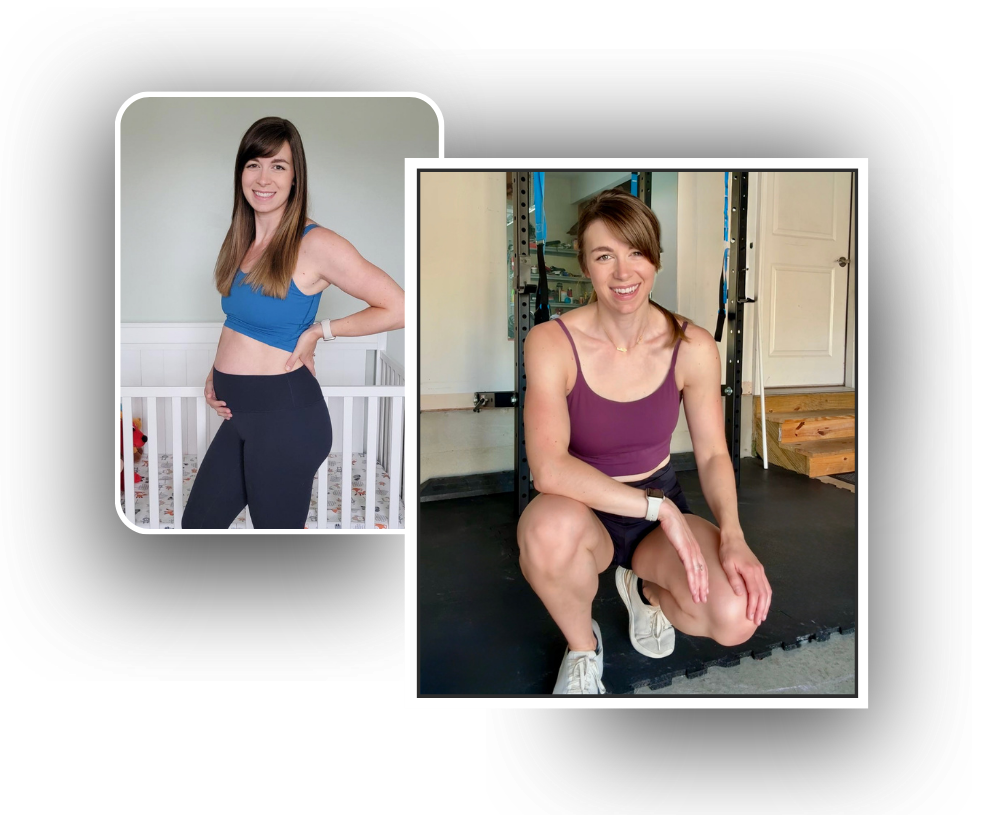
I’m Cassie
I’m a pharmacist, certified pregnancy and postpartum fitness specialist, and working mom of two boys.
I’m also the founder of Ryca Fitness and the creator behind @rycafitness__ on Instagram (come say hi!).
I created Pregnancy Pelvic Floor Connection to be a step-by-step guide that teaches pregnant women how to prepare their bodies for birth and reduce tearing. With any of my guides, I believe in teaching the most effective, simple strategies that are easy to apply in real life. In this case, that’s during pregnancy AND in the delivery room.
After experiencing multiple tears and a long recovery with my first birth, I spent my second pregnancy learning everything I could about optimal pelvic floor function, mobility, breath control, and pushing mechanics for birth. I went on to have zero tearing and a completely different recovery.
Now I help other women do the same, so you can go into birth confident and prepared with the best chance of quick healing and smooth recovery.
GET INSTANT ACCESS TO
Pregnancy Pelvic Floor Connection
One-time payment • Lifetime access
Please note: Results may vary and are not guaranteed. Due to the digital nature of this product , we do not offer refunds. All sales are final. View terms and conditions